
 Deutschland
 España
 France
 Italia
 usa
usa

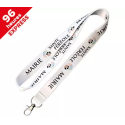
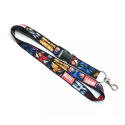
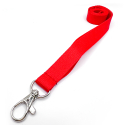
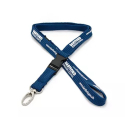
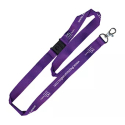
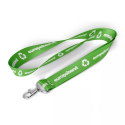
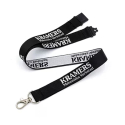









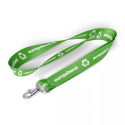

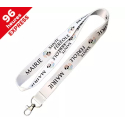


Event lanyards, more commonly known as lanyards, have become essential at professional events.
Whether for trade shows, conferences or seminars, these accessories stand out for their usefulness and their ability to be personalised according to individual needs and preferences.
But choosing the right lanyard is also a matter of size. If you are wondering how to determine the ideal size for a lanyard, this article is for you.
But beyond their aesthetic appeal, choosing the right lanyard size is crucial for several reasons.
Indeed, the size of a lanyard is not just a matter of taste. It plays a decisive role in the comfort of the wearer, ensuring optimal use throughout the event.
In addition, an appropriate size ensures the safety of the attached item, whether it is a badge, an access card or another element.
Finally, the visibility and aesthetics of the lanyard are also impacted by its size, which can influence the perception of the brand or organisation it represents.
In this guide, we will explore the different lanyard sizes available on the market. We will cover the essential criteria to consider in order to make the right choice, and finally, we will present some concrete examples of lanyards based on their size.
Ready to find the ideal lanyard for your next event? Follow the guide!
The different types of lanyard sizes
Lanyards come in several sizes and types. Each one meets specific needs and has its own characteristics.
To help you see things more clearly, we have broken down the three main types of lanyard sizes: standard, adjustable and elastic.
- Standard : The standard lanyard is the most commonly used. Its total length is generally around 90 cm. As for its width, it varies between 3/8 inch (1 cm) and 1 inch (2.5 cm). Most often made from polyester or nylon, it is recognised for its durability and affordable cost.
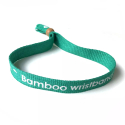
- Adjustable : As its name suggests, this type of lanyard offers the possibility to adjust its length thanks to a sliding mechanism. Its width is similar to that of the standard. It is often made from cotton or bamboo, making it more eco-friendly. However, this feature comes at a cost, and its price is generally higher than the standard.
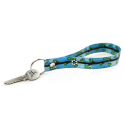
- Elastic : This lanyard is particularly flexible. It can stretch up to twice its original length. Its width is generally narrow, namely 3/8 inch or 1 cm. Made from rubber or silicone, its price varies depending on its quality.
To better visualise the differences between these three types, here is a comparative table:
|
Type |
Length |
Width |
Material |
Price |
Advantages |
Disadvantages |
|
Standard |
36 inches (91 cm) |
3/8 to 1 inch (1 to 2.5 cm) |
Polyester or nylon |
Affordable |
Easy to personalise, suitable for most needs |
May be too long or too short depending on body shape |
|
Adjustable |
Variable depending on the sliding mechanism |
Similar to standard |
Cotton or bamboo |
Higher than standard |
Allows the length to be adjusted as needed, more eco-friendly than polyester or nylon |
May be less durable than standard, more expensive |
|
Elastic |
Can stretch up to twice its original length |
Narrow (3/8 inch or 1 cm) |
Rubber or silicone |
Variable depending on quality |
Offers more flexibility and comfort, ideal for sporting or leisure activities |
May deteriorate over time, less suitable for displaying a logo or name |
Now that we have explored the different types of lanyard sizes, let’s look at the essential criteria to consider in order to choose the one that best meets your needs.
Criteria to consider when choosing a lanyard size
Choosing the size of a lanyard should not be done at random. Several criteria come into play to determine which size is best suited to your needs.
Here are the four main criteria to consider:
- The type of event : The context in which the lanyard will be used greatly influences its size. For example, at a trade show, visibility is paramount, and a standard or adjustable lanyard would be ideal. For a sporting activity or a concert, comfort and safety take priority, steering the choice towards an elastic lanyard.
- The type of wearer : The body shape and clothing of the person who will wear the lanyard are also determining factors. A lanyard that is too long or too short can be uncomfortable or restrict movement.
- The type of attachment : Depending on what you wish to attach to your lanyard (badge, card, keys, etc.), the size may vary to ensure a secure and aesthetic fastening.
- The type of personalisation : If you wish to personalise your lanyard with a logo, a name or a message, the size must be optimised to ensure good readability and visibility.
Concrete example:
- For a trade show, a standard or adjustable lanyard is recommended. It should have sufficient width to clearly display a logo and a length that allows the badge to be visible at chest level. The ideal material will be strong and durable.
Measure up!
Event lanyards are much more than simple accessories. They play a crucial role in brand promotion, event management and security. As we have seen throughout this article, their usefulness and adaptability make them essential elements for many professional events.
It is essential to understand that there is no one-size-fits-all lanyard. The choice of size depends on several factors, including the type of event, the wearer’s body shape, the type of attachment and the type of personalisation desired. Each type of lanyard, whether standard, adjustable or elastic, has its own advantages and disadvantages, and it is crucial to choose the one that best meets your specific needs.
We hope this article has provided you with valuable information to help you make the right choice. If you have any questions or suggestions, do not hesitate to contact us or join us on our social media channels.
We warmly thank you for taking the time to read this article and wish you an excellent day!
We recommend these other pages:
- What are the advantages of event lanyards with a safety breakaway?
- Event lanyards: Why are they essential for professionals?
- What is the cost of a personalised lanyard?
- Express event lanyards: how does it work?
- Event lanyards: which types of attachments should you choose?
- What are the different materials used for event lanyards?
- What is an eco-friendly lanyard and why choose one?
- What is the best lanyard?