
 Deutschland
 España
 France
 Italia
 usa
usa





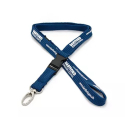
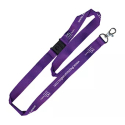

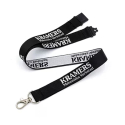

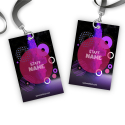









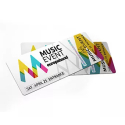



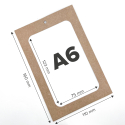


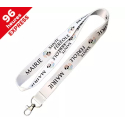

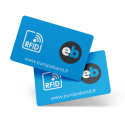

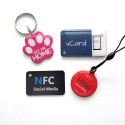
Lanyards for Businesses and Access Management: Effective and Secure Identification
In a business environment, access management and identification of employees, visitors, and contractors are key elements for ensuring security and organization. Custom lanyards are the ideal solution for clearly displaying identification badges, limiting intrusion risks, and reinforcing your company's image.
Why Use Lanyards in Business?
1. Professional and Secure Identification
Lanyards with badge holders enable immediate recognition of employees and visitors within the company. They are particularly useful for:
Employee Identification
- Full-time staff – Permanent employees requiring daily facility access
- Part-time workers – Flexible schedule employees with variable access needs
- Remote workers – Occasional office visitors requiring temporary credentials
- Contract employees – Fixed-term staff with time-limited access privileges
- Executive leadership – C-suite and senior management with unrestricted access
- Department heads – Managers requiring cross-functional area access
- New hires – Onboarding employees during orientation and training periods
Visitor Management
- Client meetings – Business visitors requiring escort or supervised access
- Prospective customers – Sales tour participants and potential partners
- Vendors and suppliers – Delivery personnel and service providers
- Job candidates – Interview participants requiring temporary building access
- Consultants – External experts working on-site for extended periods
- Auditors and inspectors – Regulatory compliance officials and certification bodies
- Family members – Employee guests for special events or emergencies
Contractor and Service Provider Differentiation
- Maintenance technicians – HVAC, electrical, and facilities repair personnel
- IT contractors – Technology implementation and support specialists
- Cleaning crews – After-hours janitorial and custodial staff
- Construction workers – Renovation and building modification teams
- Security personnel – Third-party protective services and monitoring staff
- Catering services – Food service providers for events and daily operations
- Temporary staffing – Agency workers filling short-term positions
Security Services
- Access verification teams – Front desk reception and lobby security
- Patrol officers – Mobile security conducting rounds and inspections
- Emergency responders – Fire safety, medical, and crisis management personnel
- Loss prevention specialists – Asset protection and theft deterrence staff
- Cybersecurity teams – Digital security professionals requiring physical access to server rooms
- Executive protection – Personal security for high-profile leadership
Thanks to this visual identification system, the company improves its access control while facilitating circulation within its premises.
Security Impact Statistics:
According to corporate security research, organizations implementing comprehensive badge and lanyard identification systems experience:
- 67% reduction in unauthorized access incidents
- 52% faster security response times to potential threats
- 43% improvement in visitor tracking and accountability
- 78% employee satisfaction with clear identification protocols
- ** $ 340,000 average annual savings** from prevented security breaches
Psychological Security Benefits:
- Visibility deterrence – Clear identification discouraging unauthorized individuals from attempting access
- Employee confidence – Staff feeling safer knowing everyone is identifiable
- Rapid anomaly detection – Immediate recognition of missing or incorrect credentials
- Cultural reinforcement – Professional identification creating security-conscious workplace culture
2. An Indispensable Tool for Access Management
Corporate lanyards are particularly useful in companies with restricted access zones. Associated with magnetic, RFID, or NFC badges, they enable automated controls and streamlined entry and exit management.
Access Control Technologies:
Magnetic Stripe Cards ✔ Cost-effective – Economical solution for basic access control ( $ 2-5 per card) ✔ Swipe readers – Simple entry systems requiring card contact ✔ Established technology – Reliable with decades of proven performance ✔ Limitations – Susceptible to demagnetization, wear, and copying ✔ Best applications – Small offices, low-security environments, legacy systems
RFID (Radio Frequency Identification) ✔ Contactless convenience – Proximity readers enabling hands-free access (1-10 cm range) ✔ Faster throughput – No insertion or swiping required, reducing entry bottlenecks ✔ Enhanced durability – No physical contact extends card lifespan ✔ Multiple frequencies – 125 kHz (low frequency) or 13.56 MHz (high frequency) options ✔ Integration capability – Compatible with building management and security systems ✔ Encryption options – Secure protocols preventing unauthorized duplication ✔ Cost range – $ 5-15 per credential depending on security features
NFC (Near Field Communication) ✔ Mobile integration – Smartphone compatibility enabling digital credentials ✔ Enhanced security – Dynamic authentication and encryption standards ✔ Multi-application support – Single credential for access, payments, and time tracking ✔ Future-ready – Emerging technology with growing ecosystem support ✔ User convenience – No separate card required for tech-savvy workforce ✔ Cost considerations – Higher initial investment ( $ 15-30 per credential) with long-term benefits
Biometric Integration ✔ Two-factor authentication – Badge plus fingerprint/facial recognition for high-security areas ✔ Anti-passback systems – Preventing credential sharing and tailgating ✔ Time and attendance – Automated tracking of employee hours and presence ✔ Audit trails – Comprehensive logging of all access events for compliance
Functional Benefits:
Rapid Employee Identification at Secure Entrances ✔ Turnstile integration – Automated gates opening upon credential verification ✔ Elevator control – Floor access limited to authorized personnel ✔ Parking garage access – Vehicle entry coordinated with employee credentials ✔ Time stamping – Automatic recording of entry/exit times for payroll and security ✔ Peak efficiency – 500-800 employees per hour throughput at busy entrances ✔ Reduced staffing – Automated systems decreasing security personnel requirements
Limited Access to Sensitive Zones ✔ Executive offices – C-suite areas restricted to leadership and authorized staff ✔ Laboratories – Research and development spaces protecting intellectual property ✔ Warehouses – Inventory areas controlling asset access and preventing shrinkage ✔ Data centers – Server rooms with mission-critical IT infrastructure ✔ Manufacturing floors – Production areas requiring safety certifications ✔ Financial operations – Accounting and treasury areas handling sensitive information ✔ Legal departments – Confidential case files and privileged communications ✔ HR offices – Personnel records and sensitive employee information ✔ Pharmaceutical storage – Controlled substance areas requiring DEA compliance ✔ Chemical storage – Hazardous material areas with safety protocols
Visitor Tracking and Monitoring ✔ Temporary badges – Time-limited credentials automatically expiring after visit ✔ Escort requirements – Visible designation requiring employee accompaniment ✔ Zone restrictions – Limited access preventing wandering in unauthorized areas ✔ Emergency accountability – Complete visitor logs for evacuation procedures ✔ Background verification – Pre-approved visitor lists with security clearances ✔ Real-time monitoring – Security dashboard showing all active visitors and locations ✔ Check-in/check-out – Mandatory sign-in procedures with photo capture
Industry-Specific Applications:
Healthcare Facilities
- HIPAA compliance – Patient privacy protection through access control
- Infection control – Tracking staff movement between clean and isolation zones
- Medication access – Pharmaceutical storage restricted to licensed personnel
- Emergency departments – Secure areas protecting staff from potential violence
- Maternity wards – Infant security preventing unauthorized removal
- Surgical suites – Sterile environments with limited access
- Medical records – Protected health information security
According to healthcare security studies, hospitals implementing comprehensive credential systems reduce security incidents by 71% and improve emergency response coordination by 58%.
Industrial and Manufacturing Sites
- Equipment zones – Restricting access to certified operators only
- Quality control areas – Preventing contamination of sensitive production
- Hazardous material storage – OSHA compliance for dangerous substances
- Loading docks – Securing valuable inventory during shipping/receiving
- Maintenance areas – Tool and equipment control preventing theft
- Confined spaces – Tracking personnel in permit-required areas for safety
- Patent-protected processes – Trade secret protection in proprietary manufacturing
Government Buildings and Secure Facilities
- Classified information areas – Top secret, secret, and confidential clearance zones
- SCIF (Sensitive Compartmented Information Facility) – Specialized secure rooms
- Evidence storage – Law enforcement property rooms and chain of custody
- Courtrooms – Restricted judicial areas and holding cells
- Emergency operations centers – Crisis management command facilities
- Utilities infrastructure – Power plants, water treatment, and critical systems
- Border control – Immigration processing and customs areas
Airport and Transportation Security
- TSA checkpoints – Known Crewmember and authorized personnel access
- Airside operations – Aircraft proximity areas requiring security clearances
- Air traffic control – Mission-critical facilities with stringent access
- Baggage handling – Secure systems preventing tampering or theft
- Customs areas – International arrivals and duty-free zones
- Maintenance hangars – Aircraft service and repair facilities
- Fuel farms – Hazardous material storage and distribution
According to transportation security analysis, credential-based access systems at airports prevent an estimated 95% of unauthorized access attempts and enable rapid identification during security incidents.
3. A Communication and Branding Platform for the Company
In addition to ensuring a security function, customized lanyards are an excellent internal and external communication tool.
Corporate Identity Reinforcement ✔ Brand colors – Consistent application of corporate color schemes (Pantone matching) ✔ Logo prominence – Company symbol displayed on every employee throughout workday ✔ Tagline integration – Mission statements or company mottos reinforcing values ✔ Visual consistency – Unified appearance across all departments and locations ✔ Professional image – Polished presentation for client meetings and site tours ✔ Design sophistication – Premium materials communicating quality and attention to detail
Employee Sense of Belonging ✔ Team unity – Shared identification creating collective identity ✔ Pride of affiliation – Employees proudly displaying company association ✔ Culture reinforcement – Visual representation of organizational values ✔ Tenure recognition – Different lanyard colors or designs for service milestones (5, 10, 20 years) ✔ Department identification – Color coding fostering intra-organizational connections ✔ Achievement recognition – Special lanyards for award winners or top performers ✔ Onboarding integration – New employees feeling immediately part of the team
Partner and Sponsor Recognition ✔ Event co-branding – Joint logos for collaborative conferences or training sessions ✔ Trade show coordination – Exhibitor identification at professional gatherings ✔ Client visits – Branded credentials for facility tours and partnership meetings ✔ Strategic alliances – Visual representation of business partnerships ✔ Supply chain integration – Preferred vendor recognition and coordination ✔ Community engagement – Nonprofit partnerships and corporate social responsibility
Communication Value Analysis:
By wearing a lanyard in company colors, employees become true brand ambassadors, both internally and externally.
Internal Communications:
- Department recognition – Color-coded lanyards enabling instant functional identification
- Hierarchy visualization – Differentiated designs for management levels (optional, culture-dependent)
- Project teams – Special lanyards for cross-functional initiatives
- Safety reminders – Integrated messaging about protocols and procedures
- Policy updates – QR codes linking to new guidelines or training materials
- Recognition programs – Special edition lanyards celebrating achievements
External Brand Impressions:
- Client meetings – Professional presentation building confidence and trust
- Office visitors – Consistent branding throughout visitor journey
- Trade shows – Company representation at industry events and conferences
- Community presence – Employees volunteering while displaying corporate affiliation
- Media coverage – Company credentials visible in news footage and photography
- Recruitment events – Professional appearance attracting top talent
- Social media – Employee photos amplifying brand presence online
According to employer branding research, comprehensive visual identity programs including custom lanyards increase employee engagement by 37% and improve external brand recognition by 48%.
ROI Calculations:
Brand Impression Metrics:
- Daily wear time – Average 8-10 hours per employee
- Visibility range – Recognizable from 10-15 feet in normal lighting
- Annual impressions – 50,000-75,000 views per employee (internal + external contacts)
- Cost per impression – $ 0.0002-0.0005 (substantially lower than traditional advertising)
- Retention period – 2-3 years typical lanyard lifespan
- Lifetime value – 400-800 in equivalent advertising exposure
4. A Practical and Comfortable Daily Accessory
Our corporate lanyards are designed to be worn all day without discomfort. Different materials are available to adapt to your needs:
Premium Material Options:
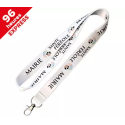
Satin Polyester ✔ Elegant and pleasant to wear – Soft texture comfortable against skin and clothing ✔ Professional appearance – Subtle sheen conveying quality and attention to detail ✔ Wrinkle resistance – Maintaining crisp presentation throughout workday ✔ Easy maintenance – Simple spot cleaning and air drying ✔ Moderate cost – Balancing quality with budget considerations ( $ 1.50-3.00 per unit) ✔ Best applications – Corporate offices, client-facing roles, professional services
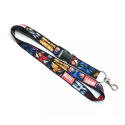
Sublimated Fabric ✔ Ideal for high-definition customization – Photographic reproduction quality ✔ Full-color capability – Complex logos, gradients, and detailed graphics ✔ Edge-to-edge printing – Maximizing branding space without borders ✔ Vibrant longevity – Fade-resistant colors maintaining appearance over years ✔ Premium positioning – Flagship offices and executive credentials ✔ Cost range – $ 2.50-5.00 per unit for sophisticated designs ✔ Best applications – Tech companies, creative agencies, design-forward organizations
Eco-Friendly Materials ✔ Perfect for CSR initiatives – Demonstrating environmental commitment ✔ Recycled content – Post-consumer PET bottles transformed into durable fabric ✔ Bamboo options – Renewable, biodegradable, and naturally antimicrobial ✔ Organic cotton – Pesticide-free agriculture supporting sustainable farming ✔ Hemp alternatives – Exceptionally durable with minimal environmental impact ✔ Carbon neutrality – Offset programs compensating for production emissions ✔ Certification options – GOTS (Global Organic Textile Standard), OEKO-TEX, FSC ✔ Employee values alignment – Resonating with environmentally conscious workforce ✔ Marketing advantage – Sustainability credentials attractive to eco-minded clients
According to corporate sustainability studies, 73% of employees prefer working for environmentally responsible companies, with 58% citing eco-friendly workplace practices as a significant factor in job satisfaction.
Comfort Engineering:
Ergonomic Design Considerations:
- Optimal width – 15-20mm balancing visibility with comfortable weight distribution
- Soft edges – Rounded or hemmed borders preventing skin irritation
- Lightweight construction – Minimal neck strain during 8-10 hour wear periods
- Breathable materials – Moisture-wicking properties in warm environments
- Flexible drape – Natural movement preventing stiffness and discomfort
- Adjustable length – Customizable positioning for different body types and preferences
- Minimal maintenance – Low-care materials not requiring special cleaning
Practical Accessories:
We also offer several accessory options:
Attachment Hardware ✔ Metal or plastic swivel hooks – Durable 360° rotation preventing twisting and tangling ✔ Lobster claw clasps – Secure fastening preventing accidental badge loss ✔ Bulldog clips – Strong grip accommodating multiple cards or thick badge holders ✔ Split rings – Simple attachment for keys, USB drives, or small tools ✔ Badge reels – Retractable convenience for frequent card scanning (extending 24-36 inches) ✔ Magnetic breakaway – Quick detachment for printers, copiers, or door access ✔ Dual attachment points – Carrying both access badge and business cards
Safety Features ✔ Breakaway clips – Essential in environments with machinery, conveyor systems, or entanglement risks ✔ Adjustable tension – Calibrating release force appropriate for workplace hazards ✔ Quick-release mechanisms – Emergency removal capability in critical situations ✔ Reassembly ease – Simple reconnection after breakaway activation ✔ OSHA compliance – Meeting workplace safety requirements for manufacturing and industrial settings ✔ Anti-strangulation design – Protecting against accidental choking hazards
According to occupational safety data, breakaway lanyards reduce lanyard-related workplace injuries by 94% in industrial environments.
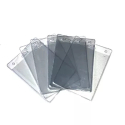
Badge Holder Options ✔ Rigid plastic holders – Protecting cards from bending, scratching, and wear ( $ 0.50-2.00 each) ✔ Soft vinyl sleeves – Flexible protection with clear visibility ( $ 0.25-0.75 each) ✔ Horizontal/vertical orientations – Matching badge layout and information hierarchy ✔ Multi-pocket designs – Accommodating access cards, business cards, and emergency contacts ✔ RFID-blocking sleeves – Protecting against electronic skimming and unauthorized scanning ✔ Waterproof options – Sealed holders for outdoor work, construction sites, or marine environments ✔ Antimicrobial materials – Healthcare-grade protection against bacterial transmission ✔ Color-coded holders – Visual departmental or clearance level identification ✔ Eco-friendly biodegradable – Compostable materials for sustainability programs
Smart Badge Integration: ✔ NFC/RFID compatibility – Holders designed not to interfere with wireless signals ✔ QR code visibility – Clear window enabling mobile scanning for visitor management ✔ Proximity optimization – Positioning cards for efficient reader contact ✔ Multi-technology support – Accommodating various credential formats simultaneously
Lanyards Adapted to All Types of Businesses
Our custom lanyards are suitable for a wide range of companies and institutions:
Corporate Headquarters and Open Office Environments
Technology Companies
- Software development – Agile teams, remote worker visits, contractor integration
- Cybersecurity operations – 24/7 NOC (Network Operations Center) with shift identification
- Product management – Cross-functional teams requiring multi-area access
- Sales and customer success – Client-facing staff with professional presentation requirements
- Executive suites – Leadership credentials with premium materials and exclusive access
- Data centers – Technical staff with specialized clearances for infrastructure access
- Innovation labs – R&D teams working on confidential next-generation products
Financial Services
- Trading floors – Real-time identification in fast-paced environments
- Private banking – Client advisors requiring discretion and professional image
- Compliance departments – Regulatory staff with audit and oversight responsibilities
- Branch networks – Consistent identification across distributed locations
- Operations centers – Back-office staff processing sensitive financial transactions
- Executive banking – Wealth management teams serving high-net-worth clients
Professional Services
- Consulting firms – Multi-client project teams with rotating assignments
- Law offices – Attorneys, paralegals, and support staff with confidential matter access
- Accounting practices – Auditors requiring temporary client site credentials
- Architecture and engineering – Design teams visiting construction sites and client facilities
- Marketing agencies – Creative staff attending client meetings and presentations
Government Buildings and Public Administration
Federal Facilities
- Cabinet departments – Employees with various security clearance levels
- Regulatory agencies – Inspectors, analysts, and enforcement personnel
- Intelligence services – Classified information handlers with compartmented access
- Military installations – Defense personnel with base access and security protocols
- Federal courthouses – Judges, clerks, marshals, and authorized personnel
- Social security offices – Staff handling sensitive personal information
- Veterans affairs – Healthcare and benefits administration employees
According to federal security standards, government facilities implementing HSPD-12 compliant credential systems achieve 89% improvement in access control effectiveness.
State and Local Government
- State capitols – Legislative staff, elected officials, and public service employees
- Municipal offices – City hall departments and constituent service centers
- Public works – Utility workers, transportation staff, and infrastructure maintenance
- Libraries and cultural institutions – Public facility staff and volunteer coordination
- Parks and recreation – Seasonal employees and program instructors
- Emergency services – 911 dispatch, emergency management, and coordination centers
Industrial and Manufacturing Sites
Automotive Manufacturing
- Assembly lines – Production workers with zone-specific access
- Quality control – Inspection teams monitoring manufacturing processes
- Engineering – Design and prototype staff with test facility access
- Supply chain – Vendor management and just-in-time delivery coordination
- Maintenance – Skilled trades with unrestricted equipment access
- Safety officers – Compliance staff conducting audits and inspections
Chemical and Pharmaceutical
- Clean rooms – Contamination control with strict access protocols
- Research laboratories – Scientists working with hazardous or controlled substances
- Production facilities – GMP (Good Manufacturing Practice) compliant operations
- Quality assurance – Testing and validation teams
- Regulatory compliance – FDA inspection preparation and documentation
- Hazmat storage – Controlled substance areas requiring DEA licensing
Food and Beverage Production
- Processing floors – HACCP compliance and food safety protocols
- Packaging lines – Automated systems requiring certified operators
- Cold storage – Refrigerated and frozen areas with temperature monitoring
- Distribution centers – Warehouse staff and logistics coordination
- Quality labs – Testing facilities for safety and consistency
- Sanitation crews – Cleaning teams with after-hours access
Healthcare Facilities and Medical Institutions
Hospitals
- Medical staff – Physicians, nurses, and clinical support with unit access
- Pharmacy – Controlled substance access requiring double verification
- Radiology – Imaging technicians with radiation area clearances
- Laboratory – Pathology and diagnostic testing personnel
- Surgery suites – Sterile environment access restricted to authorized personnel
- Neonatal ICU – Infant security protocols preventing unauthorized entry
- Emergency department – Secure areas protecting staff from potentially dangerous situations
- Medical records – HIPAA-compliant access to protected health information
According to healthcare credential research, hospitals with comprehensive badge and lanyard systems reduce patient identification errors by 64% and improve staff accountability by 71%.
Clinics and Outpatient Facilities
- Primary care – Family practice and internal medicine offices
- Specialty practices – Cardiology, orthopedics, and subspecialty clinics
- Urgent care – Walk-in medical services with variable staffing
- Dialysis centers – Chronic care facilities with regular patient populations
- Imaging centers – Diagnostic services and radiology practices
- Physical therapy – Rehabilitation services and sports medicine
Long-Term Care
- Nursing homes – Staff working with vulnerable elderly populations
- Assisted living – Dementia care and secured units
- Rehabilitation facilities – Post-acute care and recovery services
- Hospice care – End-of-life services requiring compassion and professionalism
Educational Institutions
Universities and Colleges
- Faculty – Professors, instructors, and academic staff
- Graduate students – Teaching and research assistants with lab access
- Administrative staff – Admissions, registrar, and student services
- Campus safety – University police and security personnel
- Facilities management – Maintenance, custodial, and grounds crew
- Library staff – Circulation, reference, and special collections
- Research centers – Grant-funded projects with equipment and data access
- Residential life – Dormitory staff and student housing administration
K-12 Schools
- Teachers and administrators – Educational staff and principals
- Support services – Counselors, nurses, and special education
- Cafeteria workers – Food service staff with kitchen access
- Bus drivers – Transportation staff requiring facility entry
- Parent volunteers – Temporary credentials for approved helpers
- After-school programs – Extended day care and enrichment providers
According to school safety studies, K-12 institutions with comprehensive visitor management and credential systems reduce security incidents by 82% and improve emergency response coordination by 67%.
Complete Customization and Design Excellence
Professional Design Services
Brand Identity Integration:
- Corporate style guides – Exact color matching and logo reproduction
- Typography standards – Font selection maintaining brand consistency
- Graphic elements – Patterns, textures, or imagery reinforcing identity
- Tagline inclusion – Mission statements or company mottos
- Multi-brand coordination – Parent company with subsidiary differentiation
- Merger integration – Unified credentials following corporate combinations
Functional Design Optimization:
- Readability analysis – Ensuring legibility at conversational distances (3-10 feet)
- Color contrast – Meeting WCAG accessibility standards for visibility
- Information hierarchy – Prioritizing company name, department, or role
- Dual-sided printing – Maximizing communication space with front/back designs
- QR code integration – Linking to digital business cards or company information
- Security features – Holographic elements, UV printing, or serial numbers
Department and Role Differentiation:
- Color coding – Visual departmental identification (blue = IT, red = sales, green = finance)
- Text designation – Printed role titles or access levels
- Icon systems – Graphic symbols for quick function recognition
- Length variation – Different strap lengths for management versus staff (subtle hierarchy)
- Material distinction – Premium fabrics for executive credentials
- Special editions – Commemorative designs for anniversaries or achievements
Production Specifications
Width Options:
- 10mm – Economy solution for large-scale deployments ( $ 0.75-1.50 per unit)
- 15mm – Standard professional width balancing cost and visibility ( $ 1.00-2.00 per unit)
- 20mm – Enhanced branding space for complex logos ( $ 1.50-3.00 per unit)
- 25mm – Premium statement credentials for executive leadership ( $ 2.00-4.00 per unit)
Length Standards:
- 36 inches (91cm) – Standard length positioning badge at chest level
- Custom lengths – Adjustable specifications for uniform positioning
- Breakaway placement – Strategic positioning for optimal safety release
Printing Techniques:
- Screen printing – Cost-effective for 1-3 colors, excellent durability
- Dye sublimation – Full-color photographic reproduction, unlimited design complexity
- Woven fabric – Premium textured appearance with integrated design
- Heat transfer – Detailed graphics with photographic quality
- Embroidery – Three-dimensional prestigious appearance for luxury brands
Strategic Procurement Planning
Quantity Analysis
Employee Headcount:
- Current workforce – All active employees requiring credentials
- Turnover buffer – 15-20% additional for replacements and new hires
- Contractor allocation – Temporary workers and service providers
- Visitor pool – Reusable badges for regular guests
- Event inventory – Special credentials for conferences or training sessions
Multi-Location Coordination:
- Headquarters allocation – Central office employee counts
- Branch distribution – Regional office and satellite facility needs
- Retail locations – Store-level staff credentials
- Field service – Remote employees requiring company identification
- International offices – Global consistency with local customization options
Budget Optimization
Volume Discount Structure:
- 100-249 units – Small business pricing ( $ 3.50-5.00 per complete system)
- 250-499 units – Mid-size organization rates ( $ 2.50-4.00 per system)
- 500-999 units – Enterprise pricing ( $ 2.00-3.25 per system)
- 1,000-4,999 units – Corporate volume discounts ( $ 1.50-2.75 per system)
- 5,000+ units – Strategic account pricing (request custom quote)
Cost Components:
- Lanyard base – Material, width, and printing technique
- Badge holder – Rigid, soft, or RFID-blocking options
- Hardware – Attachment clips, reels, or breakaway mechanisms
- Customization – Design complexity and color count
- Shipping – Delivery method and urgency
Long-Term Investment Analysis:
Durability Expectations:
- Expected lifespan – 2-4 years depending on material and usage intensity
- Replacement cycle – Planned refresh for brand updates or worn credentials
- Maintenance costs – Minimal with quality materials ( $ 0-100 annually for cleaning supplies)
ROI Calculations:
- Security incident prevention – Estimated $ 50,000-500,000 annual savings from access control
- Brand exposure value – $ 200-600 per employee annually in equivalent advertising
- Productivity gains – 5-8 hours per year per employee saved through efficient access
- Employee retention – Professional identification contributing to 12% reduced turnover
- Total cost per employee per year – $2-8 annually for credential system amortized over lifespan
According to corporate security ROI studies, comprehensive credential programs deliver 280-450% return on investment within 36 months through combined security, branding, and operational efficiency benefits.
Implementation Planning
Rollout Strategy:
- Pilot program – Testing with single department or location (4-6 weeks)
- Feedback collection – Employee surveys on comfort, functionality, and design
- Refinement – Adjustments based on real-world usage before full deployment
- Phased rollout – Systematic distribution across departments or locations
- Training materials – Proper wearing, care, and replacement procedures
- Communication plan – Internal messaging about new credential system
Ongoing Management:
- New hire process – Credential issuance during orientation (day 1)
- Replacement procedures – Lost or damaged lanyard policies and costs
- Exit protocols – Credential collection upon employment termination
- Visitor management – Check-in/check-out systems for temporary badges
- Inventory tracking – Centralized or departmental credential storage
- Periodic refreshes – Scheduled updates every 3-5 years for brand alignment
Order Your Business Lanyards Now!
Optimize access management and your company's image with our custom lanyards.
Why Choose Our Corporate Credential Solutions:
✅ Security expertise – Specialized understanding of access control and identification requirements ✅ Complete customization – Full design flexibility matching your corporate identity ✅ Quality materials – Premium fabrics ensuring comfort and durability for daily wear ✅ Volume pricing – Competitive rates for organizations of all sizes (100-100,000+ units) ✅ Technology integration – RFID, NFC, and smart card compatibility ✅ Fast turnaround – Standard 10-14 day production with rush options available ✅ Trusted by Fortune 500 – Preferred supplier for leading corporations globally
Comprehensive Business Solutions
Custom Corporate Lanyards
Full-color customization with company branding, departmental differentiation, and professional presentation for employee identification.
RFID-Enabled Access Lanyards
Technology-integrated solutions for automated access control, time tracking, and secure facility management.
Premium Executive Credentials
Satin materials and sophisticated designs appropriate for C-suite leadership and client-facing professionals.
Eco-Friendly Corporate Lanyards
Sustainable materials demonstrating environmental responsibility and supporting CSR initiatives.
Safety Breakaway Lanyards
OSHA-compliant designs for manufacturing, industrial, and high-risk environments prioritizing employee safety.
Visitor Management Systems
Temporary credentials, color-coded access, and coordinated badge holders for comprehensive guest tracking.
Get Started Today
👉 Request a free quote and benefit from fast delivery to equip your teams without delay!
Our corporate credential specialists understand the unique security, branding, and operational requirements of business environments. We'll work with you to create the perfect lanyard solution that enhances security, reinforces corporate identity, and improves daily operations.
Request your personalized consultation:
- Assess your access control needs and security requirements across all locations
- Review design options including materials, printing techniques, and customization
- Receive competitive pricing tailored to your volume and budget
- Explore technology integration for RFID, NFC, or biometric systems
- Access professional design services optimizing your corporate identity presentation
- Plan implementation strategy ensuring smooth rollout across your organization
Make your workplace more secure, professional, and efficiently organized with custom corporate lanyards that protect your assets, empower your employees, and project your brand with confidence!