
 Deutschland
 España
 France
 Italia
 usa
usa




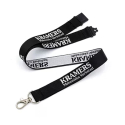

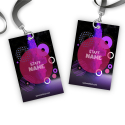

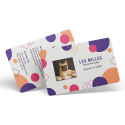









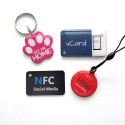

You want to create custom plastic cards for your events, your customers or your staff? PVC cards offer a robust and attractive solution for a wide range of uses: identification badges, loyalty cards, access cards, bank cards or gift cards. Their polyvinyl chloride base gives them outstanding durability, excellent longevity and optimal print quality.
But how do you turn a simple card into a truly personalised tool that reflects your image or your brand colours? This guide gives you all the keys to personalising a PVC card with method, precision and professionalism. Ready to discover the steps to follow and the options to consider?
Which PVC card model will you choose?
Standard formats or custom shapes?
Start by identifying the format best suited to your use. The ID-1 format is the most widely used standard worldwide: 85.60 x 53.98 mm. It corresponds exactly to bank cards, access badges and identification cards. Practical and recognised, this format works with almost all magnetic card readers and professional card printers.
Looking to surprise or think outside the box? Choose mini cards (generally 40 x 25 mm) or opt for a custom cut. This technique allows you to produce cards with original shapes (rounded, angular, product silhouette or logo) that instantly signal your originality. This option works particularly well in fashion, leisure or experiential marketing.
Which thickness will really meet your needs?
PVC cards are available in several thicknesses, generally expressed in microns or millimetres.
- Thickness 0.30 mm: you can use it for one-off cards such as gift cards or event passes. This thickness allows easy handling but is less resistant to wear.
- Thickness 0.76 mm: it corresponds to the standard thickness of bank cards. For a card intended for frequent use, choose this type. It supports printing on both sides, magnetic encoding and the integration of RFID chips.
- Thickness over 1 mm: reserve it for demanding environments (industry, long-term subscriptions, security badges) where strength outweighs discretion.
Which design best represents your brand universe?
Your PVC card is not just a practical tool. It tells your brand story, your image and your professionalism. Even before printing, you need to define visual guidelines consistent with your graphic identity. The right card design will offer a background compatible with your colours, a well-designed free space for your logo and typography that remains legible on all media.
Opt for templates with a white background if you want maximum flexibility. If your visual universe relies on complex graphics or a premium style, aim for opaque, coloured or even transparent cards to strengthen your visual impact.
What type of card do you want to create? A classic card readable by everyone, or a distinctive medium that will make a lasting impression? Once you have defined the dimensions, thickness and card design, you can move on to the artwork creation with a clear and well-calibrated base.
Give your PVC cards character: create visuals that catch the eye
Which tools should you use from the start to create the right design
Before even placing a logo on the background, choose a software solution suited to your skills and needs. Photoshop allows you to work in layers and manage CMYK colour profiles. Illustrator offers ideal vector precision if you need to print scalable elements. Canva Pro saves time thanks to its ready-made templates and user-friendly features. Have you already tried Figma for real-time collaboration or Affinity Designer as a lightweight alternative to Adobe? If not, consider it.
Which visual elements will enhance the impact of your card?
- High-resolution image or logo : use a resolution of 300 dpi to avoid any blur when printing. Provide the designer with EPS or SVG vector files for optimal results.
- Colours : stay true to your brand guidelines. Your tones must reflect your visual identity. In CMYK, identify and control colour variations between screen and printed medium. For example, pure red RGB (255, 0, 0) must be converted to C=0 M=100 Y=100 K=0 for consistent printable output.
- Typography : select one or two fonts maximum. Favour sans-serif fonts such as Helvetica, Gotham or Roboto to ensure immediate readability, even at small sizes.
How can you guarantee a professional aesthetic?
- Respect for margins and bleed : define an internal safety area of at least 3 mm. Allow for bleed of 2 to 5 mm beyond the trim edges. This will prevent unwanted white borders after cutting.
- Contrast and readability : use complementary colours to highlight key information. White text on a pastel background reduces readability. Test your contrasts with tools such as the WebAIM Color Contrast Checker.
- Visual balance : avoid overcrowding. Let elements breathe through good spacing. Have you considered using a layout grid to guide content alignment?
Personalise each PVC card down to the smallest detail
Which elements can you personalise on a card ?
You can transform a standard PVC card into a fully individualised medium by integrating data specific to each holder. This step turns each card into an identification card, a professional badge or a bespoke customer card.
Start with visible information:
- First and last name : clearly display identity to strengthen the relationship between the user and your brand.
- Photo : put a face to the card to better control access or reinforce institutional image.
- Customer number or staff ID : add a unique identifier to simplify accounting, commercial or administrative management.
- Role or department : clarify the user's role within your company or organisation.
- Expiry date : set a usage period to manage service access or control renewals.
How can you integrate coded and automatically detectable elements?
Personalised data is not limited to visible elements. You can also embed dynamic information that can be quickly processed by IT systems.
Use these digital solutions to automate identification and traceability:
- Barcode : encode an identifier readable by a simple optical scanner. This format speeds up access or transactions.
- QR code : give users instant access to a web page, profile or database via a smartphone.
- Alphanumeric serial number : generate a unique identifier. You improve stock management, card tracking and protection against duplication.
Have you already defined which technology best suits your use? Will you opt for a simple barcode or integrate more advanced functions with a QR code and serial number? Choosing these options at the design stage will save you time during final printing.
Embedded technologies: bring your PVC cards to life
Which technologies should you use for a functional PVC card?
Do you want to go beyond a simple printed card ? Integrate embedded technologies to turn your medium into a truly smart tool. Here are the main options to assess according to your use.
RFID chips: betting on contactless
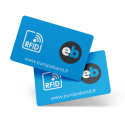
RFID (Radio Frequency Identification) allows you to read or write data on the card without physical contact. You use this technology for applications requiring speed and security, such as:
- Access control to secured buildings or sensitive areas
- Passing through turnstiles in public transport
- Traceability in industrial environments
You can choose between low-frequency RFID (125 kHz), high-frequency (13.56 MHz) or ultra-high frequency (860–960 MHz). For a standard access card such as MIFARE Classic, you use a frequency of 13.56 MHz, with 1 KB memory and a unit cost from €0.70 incl. VAT in large volumes.
Magnetic stripe: the proven solution
Still widely used, the magnetic stripe remains a reliable and cost-effective technology. You encode an ISO 7811 stripe with three tracks adjustable according to the data to be stored. You use it for:
- Simple loyalty cards
- Hotel room cards
- Time and attendance badges
Encoding costs remain below €0.10 per card, but the security of these stripes is limited. You will need to combine it with other systems if you handle sensitive data.
Contact smart cards: prioritising security
You insert a visible chip that requires physical contact with the reader. This type of card is commonly used for:
- EMV bank or credit cards
- Telephony SIM cards
- Government security cards
This format allows you to secure data exchanges using advanced encryption algorithms. You choose the memory capacity according to the application, from a few KB to several hundred. Integration increases the unit price, often above €1.50 incl. VAT, but you achieve a very high level of trust.
Which practical applications can you consider?
By combining these technologies, you can deploy your PVC cards across a wide range of sectors. You might use an RFID chip to control access within a company while integrating a magnetic stripe for the staff canteen. For a loyalty programme, you combine impactful visual design with contactless technology to manage customer points at the till.
Have you defined your priorities in terms of security, functionality and cost? Based on your answers, you can guide your technological choice to turn the card into a high added-value tool.
Turn your personalised PVC cards into a powerful marketing lever
Creating a card that strengthens brand and company image
When you personalise PVC cards, you activate a physical communication channel that extends your visual identity into your customers' daily lives. You print your logo, brand guidelines and colours on an object your customer consults regularly. This creates a constant reminder of your brand, more tangible than a digital medium. In 2023, 76% of consumers stated that a high-quality physical medium improved their perception of a brand (source: Two Sides study).
What does your current PVC card reflect? Its texture, its PVC card finishes, its typography: each element conveys a message about your positioning and values. You can, for example, integrate selective varnish to visually prioritise information or opt for embossed card printing to emphasise a premium presence.
Customer relationships: loyalty cards, VIP cards, gift cards
A well-designed PVC card goes beyond visual identity. It actively builds customer loyalty. In the retail sector, physical loyalty cards continue to deliver tangible results. In France, 83% of consumers use at least one physical loyalty card across all sectors (source: Nielsen, 2022).
- Loyalty cards: Reward repeat business with a motivating and clear design. Use QR codes or RFID chips to facilitate tracking.
- VIP cards: Offer a visual privilege. Metallic colours, mirror lamination, embossed typography: you assert the holder’s status.
- Gift cards: Multiply use cases while exposing your brand to a new audience. Clearly display the amount, add a seasonal visual or a personalised illustration.
Have you explored a hybrid physical and digital version? By combining an RFID card with a mobile app, you synchronise loyalty benefits, accumulated points and personalised notifications.
Custom cards to enhance user experience and sense of belonging
You create attachment when you add an individual touch such as an engraved first name or a printed photo. This approach strengthens the emotional bond and reduces customer churn. Brands like Decathlon or Sephora have applied this via named cards, improving retention by an average of 12% after 6 months (source: Retail Customer Experience, 2023).
Do you integrate your card into a welcome ritual? You could, for example, present it in carefully designed packaging or pair it with a handwritten note. These simple gestures trigger better brand recall, up to 67% (source: Global Insights & Analytics).
Being original in the final product to leave a lasting impression
Do you think all PVC cards look the same? Explore atypical formats: rounded corners, modified dimensions, custom cuts. You create an immediate surprise effect. The use of unexpected finishes (holographic inserts, thermosensitive inks, tactile textures) captures attention and extends how long the customer keeps the card.
Inspiring example: a luxury hotel brand incorporated a textile fragment from its signature bedding into its VIP cards. Result: 45% of VIP customers kept it for more than 9 months, and 31% showed it to a friend. How does your current PVC card invite this type of conversation?
We also recommend these pages: