
 Deutschland
 España
 France
 Italia
 usa
usa






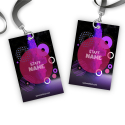

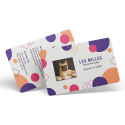














Do you print loyalty cards, event badges, membership cards or business cards? Before starting production, you need to choose the right format and suitable thickness. These two elements determine compatibility with your card printers, influence durability, and affect the final appearance of each card.
Depending on the intended use, you will not choose the same specifications. For example, an access control card must withstand frequent handling, while a promotional card must above all display sharp colours and an impeccable finish. Have you ever tested different thicknesses to compare how rigid they feel in the hand? Do you know whether your colour ribbon is compatible with a 1000-micron card?
Discover in the rest of the article how to choose a pvc card based on its format and thickness, always keeping your brand image requirements in mind.
Which PVC card format suits you best? Discover the standards
CR80 format: the universal reference
You are probably already using the CR80 format without realising it. With dimensions of 85.60 x 53.98 mm, it corresponds exactly to a bank card. Manufacturers widely adopt it to create loyalty cards, membership cards or identification badges.
You find this format everywhere because its size makes everyday use easy. It fits into a wallet, card readers or badge printers. You can also add magnetic stripes, chips or barcodes without compromising its compactness.
CR100 format: more surface, more impact
Are you looking for more space to display information? The CR100 measures 98.5 x 67 mm. This more generous size allows you to add a larger photo, a more visible logo or more detailed security features.
Hospitals, public institutions and events use this format for named badges when they want information to be readable from a distance or when rapid identification is required in a professional environment.
Other standard formats suited to specialised uses
In addition to CR80 and CR100, several other dimensions are used depending on the sector:
- ID-000 format: 25 x 15 mm. This corresponds to the size of a SIM card. You mainly use it for telephony or Internet of Things applications.
- CR79 format: 83.92 x 51.03 mm. Slightly smaller than CR80, this format fits perfectly into specific badge holders or certain clip systems.
- Long cards: up to 140 mm. You often choose them for event keys or VIP badges where aesthetics take priority, with an increased print area.
Which format seems most suitable for the readability you want to achieve? Do you need a standard medium or a stronger visual presence?
Which thickness should you choose for your PVC cards? Understand the differences
Thin cards: 10 and 20 mil
PVC cards of 10 mil (0.25 mm) or 20 mil (0.50 mm) are suitable for temporary uses or applications requiring great flexibility. You can easily slip them into soft sleeves, integrate them into files or combine them with a cardboard or magnetic backing.
Do you use disposable cards such as visitor badges or single-use promotional cards? These thin formats represent an effective and economical option.
Classic thickness: 30 mil
30 mil (0.76 mm) cards comply with the ISO/IEC 7810 ID1 standard, which defines the characteristics of bank cards and identification documents. This thickness guarantees ideal rigidity for access cards, loyalty cards, professional identification cards or transport passes.
Badge printers, card printers and encoders read and process this thickness without constraint. Ribbon manufacturers, such as Zebra or Evolis, design their consumables based on this standard.
Thick cards: 40 mil and above
Cards exceeding 40 mil (1.00 mm and above) meet specific requirements. Do you use cards for access control in industrial environments? Do you handle badges resistant to impacts or adapted to long-distance visual identification? Choose these reinforced thicknesses.
50 mil (1.27 mm) and 60 mil (1.52 mm) cards better resist mechanical wear and offer a longer lifespan, particularly in time attendance systems or turnstiles. However, be careful: most printers do not support these denser formats. Check your machine’s compatibility before ordering.
Impact on printing
Do you choose a very thin card? The risk of jams increases, especially with double-sided printing or lamination printers. Stability decreases during passage through heated rollers. Prints shift more easily, affecting readability and graphic precision.
Colour ribbons (YMCKO), holographic ribbons or protective overlays react differently depending on thickness. A card that is too thick, poorly centred in the tray, causes friction. This can lead to ribbon breakage or overheating of the thermal print module.
Before any order, test a sample on your printer. Have you noticed a significant degradation in quality or a longer printing cycle? Thickness plays a direct role.
Thin cards or thick cards: the format match-up
Why choose a thin card?
Are you looking for a lightweight, flexible and economical solution? Thin PVC cards have a thickness below 0.5 mm, often around 0.25 mm. They are perfectly suited to simple needs such as PVC business cards or disposable badges.
- Remarkable flexibility : a thin card bends without breaking. You can use it in environments requiring frequent handling.
- Wide compatibility : entry-level printers easily accept these formats. You do not need specific equipment.
- Reduced cost : you significantly lower the unit price, especially in mass production.
Where thin cards reach their limits
A thin card also has constraints. Do you need a medium resistant to abrasion or tampering? In this case, the thin version will not be sufficient.
- Low durability : under wear and tear, it quickly shows marks. The surface deteriorates faster than on a thicker card.
- Limited security : you cannot integrate RFID chips or magnetic stripes without risking malfunctions.
What benefits does a thick card offer?
Thick PVC cards, generally 0.76 mm, offer superior performance. They meet the requirements of secure identification, loyalty or electronic access systems.
- Increased robustness : you obtain a rigid card, ready to withstand intensive use for several years.
- Compatibility with embedded technologies : you can integrate a contactless chip, a high-density magnetic stripe or a permanent QR code.
- Professional image : a thicker card inspires confidence. It offers better grip and visually enhances your organisation.
What should you watch out for with a thick card?
Investing in a more technical card involves some constraints. Have you already checked your printer’s capacity? Is it consistent with your badge issuance budget?
- Higher unit price : the cost of materials and manufacturing processes increases with thickness.
- Specific printers required : many models do not handle cards beyond 0.5 mm. You need equipment compatible with 30 mil (0.76 mm) printing.
Adapt the thickness of your PVC cards to each use
Thin cards for occasional or single-use applications
Are you targeting temporary or disposable use? Thin PVC cards, from 0.25 to 0.50 mm, will meet your expectations. Transport operators such as RATP or SNCF produce several million magnetic tickets each year on thin PVC media, often around 0.36 mm. You can also opt for this thickness when issuing event cards, daily visitor badges or promotional cards with a limited lifespan.
Standard cards for professional and institutional needs
The 0.76 mm thickness, known as “CR80 standard ISO 7810”, equips the majority of institutional cards. Do you want to create company badges, membership cards, access cards or school badges? Select this thickness for its compatibility with most printers and its robustness. In business, it represents nearly 90% of identification-related needs, according to data from IDentiv and DataCard.
Thick cards for enhanced security
Do you manage sensitive access? Do you issue bank cards? PVC cards from 0.82 to 1 mm thick embed more advanced security technologies. For example, EMV chip cards used in finance often reach 0.84 mm and require a multi-layer structure. You improve resistance to bending and significantly reduce the risks of duplication or physical breach.
Why adjusting format and thickness to your use guarantees optimal results
Before starting the printing of your cards, do you consider their expected lifespan? Their distribution method and usage environment also matter. You reduce production costs and increase user satisfaction when you select the right balance between lightness, strength, security and longevity.
Why thick PVC cards make the difference in a professional environment
Superior resistance to wear and mechanical stress
Do you handle your badges several times a day? Thick PVC cards offer better durability over time. A 760-micron card has an average lifespan of 3 to 5 years, while a 320-micron card shows visible degradation from the first year of intensive use. Material density improves resistance to scratches, bending and daily friction with a reader or rigid holder.
A physical barrier against counterfeiting
Thick cards more easily integrate complex security elements. Do you use access badges or professional cards containing confidential data? Thickness increases the difficulty of reproduction and forgery. For example, an 800-micron badge allows the insertion of a multi-layer hologram without compromising card flexibility.
Extended compatibility with embedded technologies
Do you want to integrate a magnetic stripe, an RFID chip or a QR code? The structural stability of thick cards ensures reliable integration of these components. A standard 760-micron card accepts RFID encapsulation without deformation or interference. Repeated passage through readers maintains accuracy thanks to card rigidity, even after several thousand cycles.
Immediate impact on the perception of your company
What impression do you want to give when handing a badge to a visitor or colleague? A 760 to 1000-micron card displays a professional-quality finish. It conveys solidity, seriousness and attention to detail. In a corporate environment, you strengthen your visual identity and the credibility of your services by offering a card with a sharp visual, perfect edges and reassuring rigidity.
- A thicker card does not bend in pockets or badge holders
- Print rendering remains stable and sharp for longer
- Data remains legible, even with intensive use in demanding environments
Have you ever tested the effect of a heavy, rigid card in your hand? The sensation alone is often enough to reinforce the impression of value and professionalism.
Choose originality with custom formats and special cut-outs
Non-rectangular shapes: unleash your creativity
Do you want to break away from the classic PVC card shape? Choose custom cut-outs. You can have your cards cut into a circle, star, heart or any other silhouette depending on your project. This option suits event communication, leisure or retail sectors. You enhance your image by standing out visually from the very first contact.
Rounded corners, wavy or asymmetrical edges also add a contemporary touch. Is it a badge for a trade show or a promotional card for a lifestyle brand? Combine bold shape with impactful graphic design.
Additional features integrated into the card
- Transparent windows : allow easy reading of a name, a QR code or content printed on a secondary medium
- Perforations : make it easier to wear around the neck or attach to supports with a standard or oblong hole
- Embossed or braille inserts : improve accessibility or generate higher perceived value for a premium card
What can you add to your PVC cards to make them immediately recognisable and functional? These options enhance practicality as well as the sensory impact of your medium.
A tailor-made tool for your marketing campaigns
Are you organising a promotional operation or a corporate event? Use special formats to create VIP cards, access badges or invitations that favour a personalised experience. A specific cut-out conveys a clear message: your event remains unique. Several cosmetics, fashion or luxury automotive brands use these formats to create exclusivity with their target audience.
Technical limitations to anticipate
Custom formats are not printed in most desktop printers. You generally need to order them pre-formed from a specialised plastic card supplier. Manufacturing is then carried out using laser-cut moulds or stamping dies depending on the complexity of the design. Do you have the right partner for this step? Anticipate this point in your production schedule.
Are you still unsure about the right PVC card format or thickness?
You now have all the necessary data to differentiate formats, understand thicknesses and identify the standards applicable to PVC cards. ISO/IEC 7810 standard dimensions, thicknesses ranging from 0.25 mm to 1 mm, and compatibility requirements with thermal printers all directly influence the functionality and longevity of your card.
Are you looking for a rigid and secure card for a long-term access badge? You should opt for a minimum thickness of 0.76 mm. Do you want to facilitate insertion into a sleeve for a one-off event? A 0.50 mm card is more than sufficient. The right choice will deliver the expected durability, print quality and security.
Take a moment. What is your main constraint: budget, machine compatibility, long-term resistance, or aesthetics? These criteria should guide your decision, not the other way around.
Do you work in a local authority, an educational institution, a multi-site company or a retail business? You will achieve better results by relying on a qualified plastic card supplier. They can guide you towards proven models based on your printer type, frequency of use or your personalisation constraints (barcodes, RFID chip, protective varnish, etc.).
Get in touch now with a specialist to select a format suited to your use. A well-chosen card streamlines your internal processes and improves the user experience without compromising security.
We also recommend these pages: